Toshirō Mayuzumi
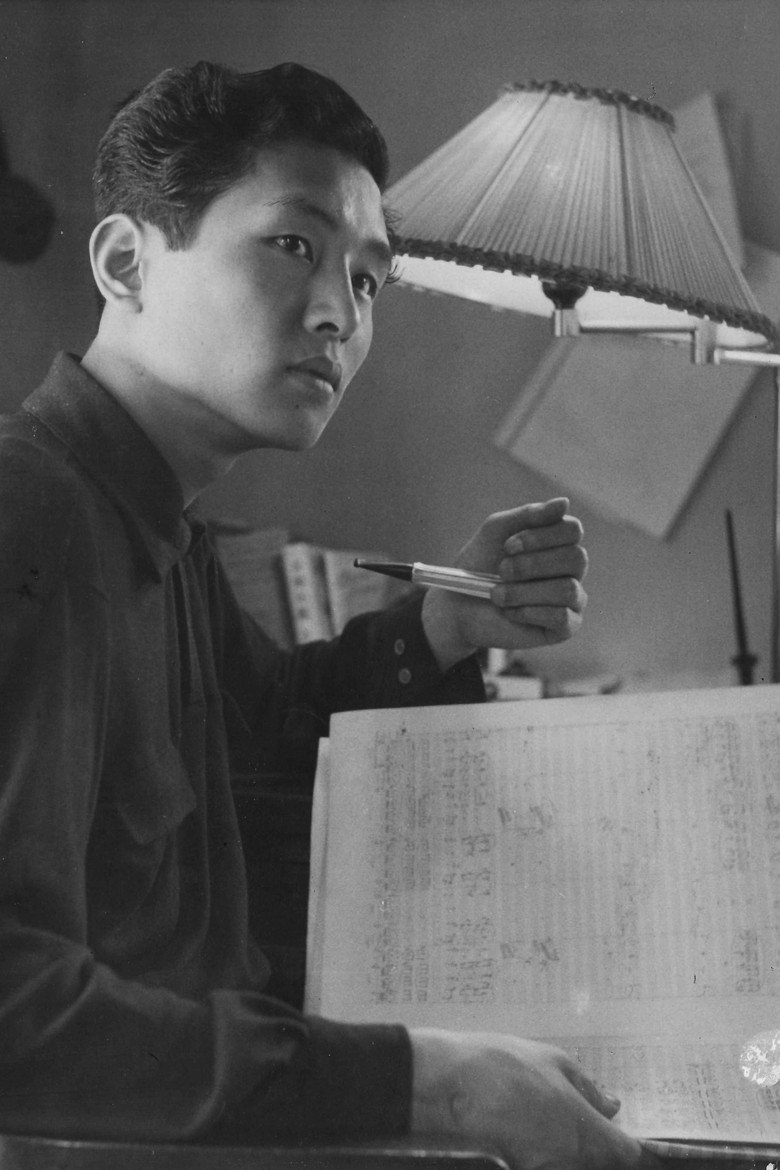
Toshirō Mayuzumi (Japanese: 黛敏郎) (20 February 1929, Yokohama – 10 April 1997, Kawasaki) was a Japanese composer known for his implementation of avant-garde instrumentation alongside traditional Japanese musical techniques. His works drew inspiration from a variety of sources ranging from jazz to Balinese music, and he was considered a pioneer in the realm of musique concrète and electronic music (Editors of the Encyclopedia Britannica n.d.; Kozinn 1997), being the first artist in his country to explore these techniques (Layne n.d.). In the span of his career, his works included symphonies, ballets, operas, and film scores (Kennedy and Kennedy 2007), and was the recipient of an Otaka prize by the NHK Symphony Orchestra and the Purple Medal of Merit (Kirkup 1997).
- Known for
- Sound
- Born
- 1929-02-20 · Yokohama, Kanagawa Prefecture, Japan
- Died
- 1997-04-10
Known for
- Good Morning (1959) — Original Music Composer
- The Bible: In the Beginning... (1966) — Original Music Composer
- Street of Shame (1956) — Original Music Composer
- Reflections in a Golden Eye (1967) — Original Music Composer
- When a Woman Ascends the Stairs (1960) — Original Music Composer
- The End of Summer (1961) — Original Music Composer
- The Insect Woman (1963) — Original Music Composer
- Profound Desires of the Gods (1968) — Original Music Composer
- Pigs and Battleships (1961) — Original Music Composer
- The Pornographers (1966) — Original Music Composer
- Intentions of Murder (1964) — Original Music Composer
- Tokyo Olympiad (1965) — Original Music Composer
- The Kremlin Letter (1970) — Original Music Composer
- The Woman in the Rumor (1954) — Original Music Composer
- A Sun-Tribe Myth from the Bakumatsu Era (1957) — Original Music Composer
- Conflagration (1958) — Original Music Composer